Today, thanks to online video, a brand can devote 80% of its budget to crafting a relevant, compelling message, rather than to buying media space and funding advertising placements.

A revolution in three letters: the replacement of CPM by CPC. A marketing fundamental whose full significance is not always appreciated.
The power of CPC (cost per click)
What does a marketer do when buying ad space to run a spot on a television channel? They buy CPM (cost per thousand impressions) — that is, not visibility for their brand, but mere display. Whether the viewer is paying attention or not, sitting in front of the screen or in the kitchen with the fridge door open, the advertiser pays for the message to be shown.
Online advertising started out on exactly the same model, charging for banner ads by the number of impressions. Except that on the Web, everything can be measured! As click-through rates on those banners fell year after year, their value depreciated considerably, weakening an entire ecosystem built on advertising revenue.
The reaction was swift: if what actually works is a click, then only clicks would be paid for. While mere display does have real value for a brand’s exposure and awareness, the drive to serve advertisers’ needs as effectively as possible won out — and today, CPC dominates the online communication market.
Where online video fits in this new ecosystem
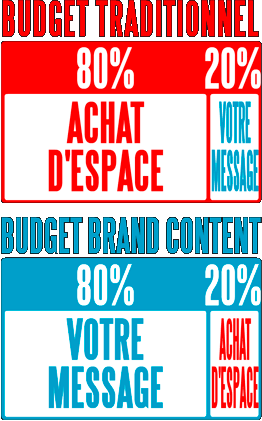
In traditional advertising, producing the message has always had a cost. On average, 20% of a communication budget went to designing and producing the advertising message, while 80% was reserved for media buying.
To put it simply, the rise of content marketing inverts that Pareto ratio (80/20). Today, a brand can devote 80% of its budget to the crafting and relevance of its message, rather than to funding advertising placements. It is a fundamental shift — and one that comes at just the right time, now that brands must learn to enter into conversation with their audience.
The immediate future belongs to dialogue with the consumer
Investing in content marketing is one of the first steps in this approach of exchange with consumers and respect for their expectations. Replacing an advertising message (hammered home with more or less force depending on the budget) with content that is interesting in its own right, with a use value genuinely appreciated by customers — that is the first signal a brand can send its clients to show it is evolving in step with society.
Content marketing frees up budget for an essential mission!
Your customers buy your brand far more than they buy your product. By lightening your media-buying expenses, you free up budget to develop a story that strengthens your brand. You give yourself four times more resources to invest time and effort in a direct, constructive dialogue with the community formed by your customers. If you take care to adopt a sincere approach (not just a surface posture), and if your content is genuinely appreciated by your customers, you can look to the future of your business with serenity.