Introducing interactivity into a fiction programme offers viewers a particularly original experience, one that involves them as no other film can.
A history of the interactive movie
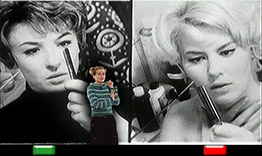
To our knowledge, the very first interactive movie whose plot and story are decided by the audience is called “Kino-Automat“. It was made in 1967 to be screened in the Czechoslovak pavilion at the 1967 World’s Fair in Montreal.
The film was a one-hour screening during which two moderators helped the audience make the interactive choices, using a box provided to each member of the public. The box had a red button and a green button, and the choice made by the majority of the audience decided what happened next in the programme.
“Hypnosis”, the first interactive movie online
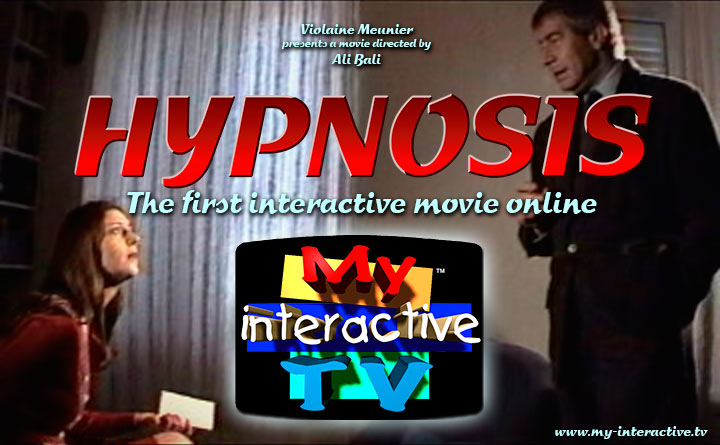
The founders of 3TOON (Ali Bali and Violaine Meunier) took their first steps on the Internet by putting online the first interactive movie available to Internet users. The film, entitled “Hypnosis”, was made in 1997 and went online the following year.
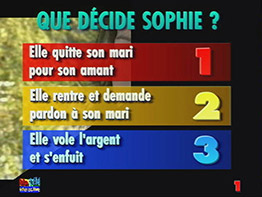
It was intended to test the interactive fiction concept “My Interactive TV“, developed to exploit the possibilities offered by what were then the new media: DVD and satellite television.
The result was a 19-minute film (following one path) which actually contained 50 minutes when you add up the various options offered to viewers.
The main advantage of this concept over previous experiments is that it takes into account each viewer’s individual choice (or each household’s, in the case of a TV broadcast), instead of merely satisfying the choice of the majority. It also has the advantage of offering viewers a very special experience: the feeling of being able to act on the course of the story.
Below, you can watch the film up to the first question; to go further and, above all, enjoy the interactivity, head straight to the dedicated site:
http://www.my-interactive.tv/

The Sixth Track
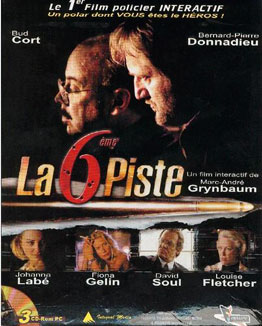
In May 1998, director Marc-André Grynbaum presented at the Cannes film market a first version of a feature film he described as the “first interactive thriller”.
In fact, when editing was completed a few months later, it turned out to be a film in 2 versions. A “classic” — that is, linear — 90-minute feature. And an interactive version totalling 4 additional hours of film!
The interactive version was sold as a 3-CD-ROM box set. It remains one of the boldest experiments in interactive movies, with a large budget of 30 million francs (approximately 4.5 million euros, not adjusted for inflation), and internationally renowned actors (David Soul and Louise Fletcher) alongside the French actors Bernard-Pierre Donnadieu and Fiona Gélin.
Last Call, the first interactive horror movie in cinemas
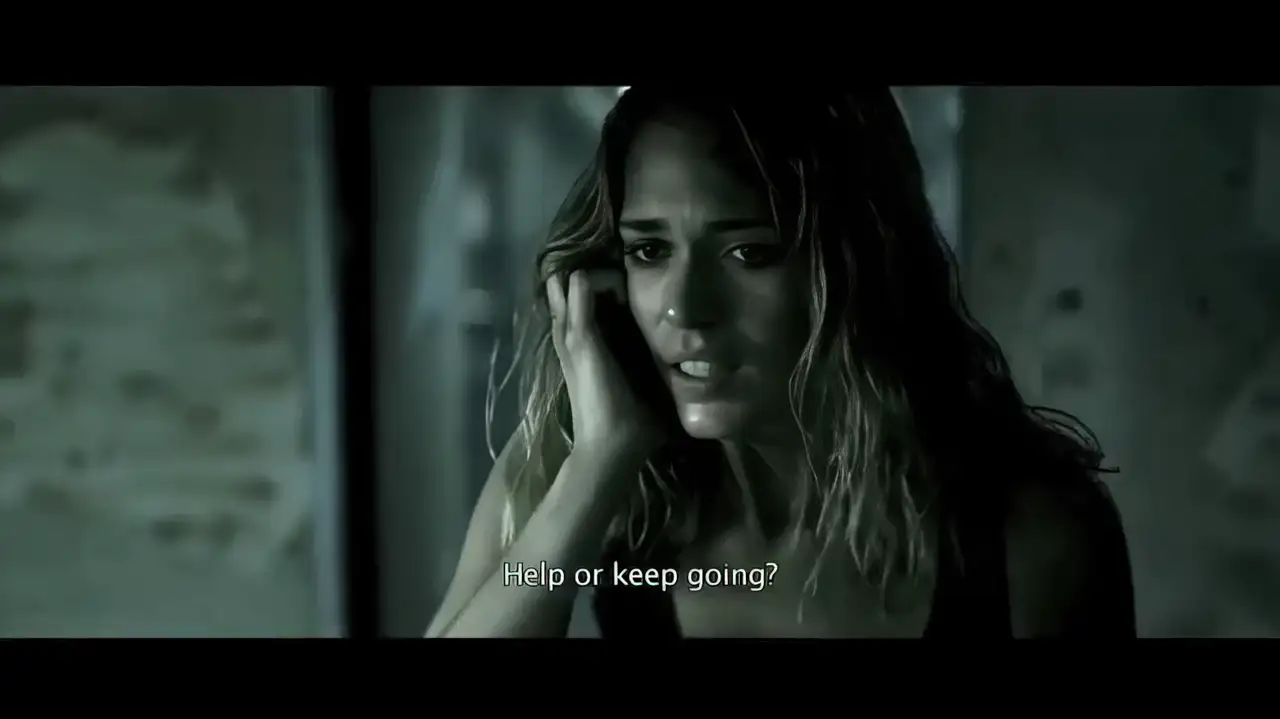
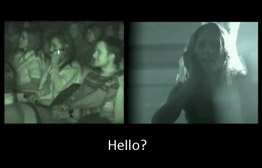
In spring 2010, the German version of the 13th Street television channel launched a particularly original communication operation by producing a short film for movie theatres — with the distinction of being the first interactive horror movie.
Here again, multiple choices are involved; what is new is how it works. One of the spectators in the theatre is called on their mobile phone, and it is by voice (thanks to speech-recognition software) that instructions are given to the film’s character…
Although the interactivity is in fact limited to a single spectator drawn at random in the theatre, the video below reveals an experience just as thrilling for everyone else in the audience (thrill-seekers, that is).